
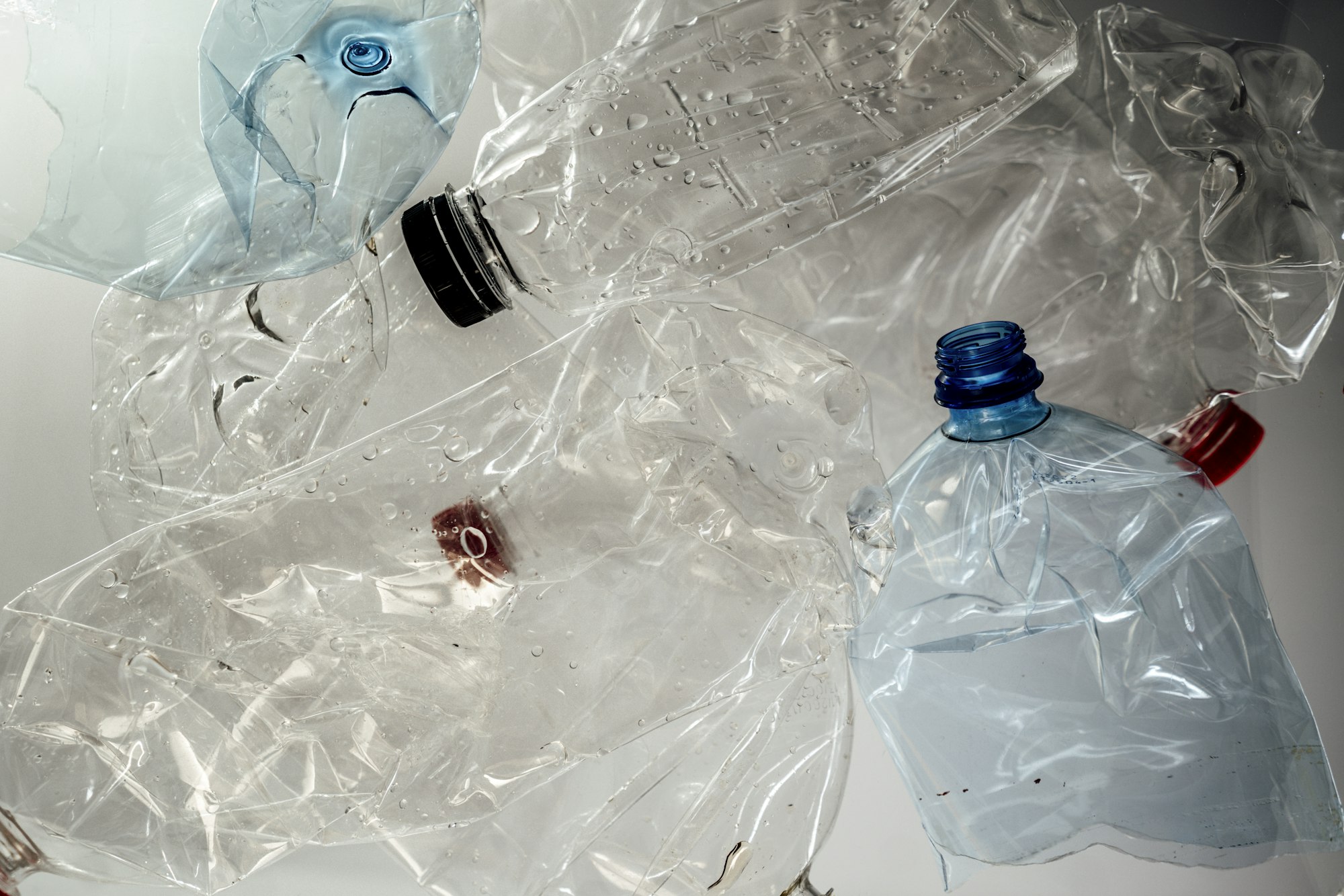
Recycled PET, or rPET, is PET recovered from used packaging and processed into new material. A large share of it goes into fibre, strapping and non-food packaging. Food-grade rPET is held to a higher standard, because it goes back into direct contact with food and drink.
Why food contact changes everything
During its first life, a PET bottle can pick up traces of whatever it held, or of whatever it met after it was thrown away. Washing removes what sits on the surface, but material meant for food contact also has to be cleaned of substances that may have migrated into the plastic itself.
That is why authorities judge the recycling process, not only the finished pellet. In Europe, for example, the European Food Safety Authority (EFSA) assesses whether a PET recycling process can decontaminate material well enough for it to be used in contact with food again.
What food-grade rPET depends on
- Clean, well-sorted input. Food-grade output starts with what goes in. Metals, labels, other plastics and coloured bottles are removed before the PET is ground into flakes.
- Thorough washing. Hot and cold washing strips glue, label residue and dirt from the flakes.
- Decontamination at high temperature. Extrusion under vacuum draws out volatile substances, and solid-state polycondensation (SSP) holds the material at high temperature for longer, cleaning it further while restoring its intrinsic viscosity.
- Testing, batch after batch. Intrinsic viscosity, colour and acetaldehyde content are checked so that every delivery performs as expected.
Where food-grade rPET goes
Once it meets the standard, food-grade rPET can replace virgin PET in demanding applications:
- Carbonated and still beverage bottles, and PET preforms
- Food trays and containers
- PET sheet for thermoformed packaging
- Cosmetic and personal care bottles
For manufacturers, that is the real value of food-grade rPET: recycled content in the packaging that needs it most, without compromising on safety or performance.